The big picture
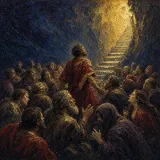
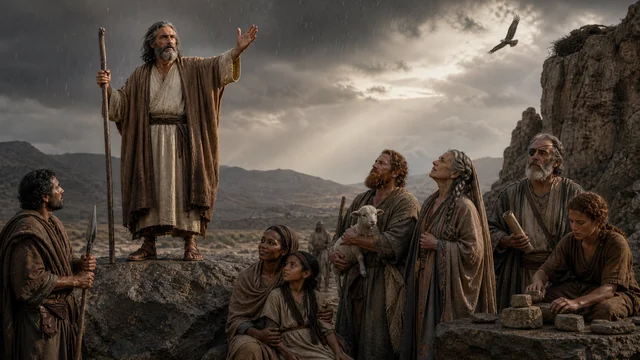
Deuteronomy 32 turns the covenant witness into poetry and gives Israel images difficult to forget. The LORD is named first as the Rock, perfect in work and just in all his ways, so the people's later corruption cannot be blamed on a defect in the one who formed them. The song remembers desert care, eaglelike protection, abundant food, and the striking claim that Jacob is the LORD's own portion. Then abundance twists into betrayal: Jeshurun grows fat and kicks, forgetting the Rock who gave life and rescue. Judgment answers that broken allegiance with equally vivid images of fire, hunger, venom, sword, and terror, yet even the threatened devastation is restrained where enemy boasting would deny the LORD's hand. The song moves finally toward vindication, mercy, and a summons to the nations to rejoice. After all that poetry, Moses makes the purpose plain. These words are not empty. They are to be set in the heart, taught to children, and treated as life.
In this chapter
- Rainlike Teaching Begins with a Charge Against the Children Deuteronomy 32:1-6
The Song of Moses calls heaven and earth as witnesses, but its first image is surprisingly gentle.
- Israel Is the Inheritance the LORD Claims for Himself Deuteronomy 32:7-14
Memory widens from family testimony to the ordering of nations and then narrows sharply to one claim: “the LORD's portion is his people.” Israel receives an inheritance, yet the song also dares to describe Jacob as the inheritance the LORD claims for himself.
- The Well-Fed Creature Kicks Its Provider Deuteronomy 32:15-18
Jeshurun is an affectionate name associated with uprightness, which makes the next verb almost comic in its violence: the well fed creature “kicked.” The repeated language of fatness belongs to the abundance just celebrated.
- Jealousy Answers Jealousy, and Judgment Has a Stated Restraint Deuteronomy 32:19-27
The judgment answers the offence in mirrored language.
- The Numbers Do Not Explain the Defeat Deuteronomy 32:28-35
The startling arithmetic of one chasing a thousand and two putting ten thousand to flight is meant to break confidence in numbers as the explanation.
- False Protectors Fall Silent, and the Nations Are Summoned to Rejoice Deuteronomy 32:36-43
The song reaches a point where Israel's power is gone, and there the word “judge” stands beside a turn toward compassion for the LORD's servants.
- The Song Must Reach the Children as Instruction Deuteronomy 32:44-47
After the long song, Moses refuses to let its poetry remain a performance people admired and forgot.
- The Man Who Has Spoken of Life Is Told Where to Die Deuteronomy 32:48-52
The timing is almost painfully precise.


Scripture beside the summary
Deuteronomy · King James Version · 52Deuteronomy 32:1-6
Rainlike Teaching Begins with a Charge Against the Children
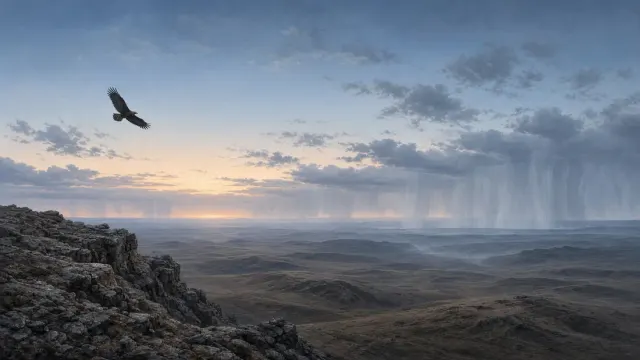
The Song of Moses calls heaven and earth as witnesses, but its first image is surprisingly gentle. Teaching is compared to rain, dew, small rain, and showers on grass. That softness does not cancel the severe charges that follow. It frames them as instruction meant to reach living hearers rather than as denunciation performed for its own spectacle. Before Israel's corruption is named, the LORD is called “the Rock.” His work is perfect, his ways are judgment, and he is without iniquity. The order matters. When the song turns to a “perverse and crooked generation,” it has already established that the defect lies elsewhere than in the one who made them. Then the father language makes the breach personal as well as legal. Israel is not a stranger being introduced to an unknown deity. The people repay the one who bought, made, and established them with foolishness. The accusation has force precisely because it rests on a prior relationship and a remembered act of divine formation.
Deep dive
The witnesses called in chapter 31 now receive the opening address. The song begins on a cosmic scale, yet its first comparison is to the gentle action of rain upon tender growth. The teaching is meant to reach and sustain living hearers. That image is worth retaining when the words become severe: the charge is delivered as instruction, not as a spectacle of denunciation detached from the people receiving it.
The LORD is called the Rock before the people's corruption is described. His work, ways, truth, and justice establish the standard against which the following conduct is measured. The contrast does not leave the disaster to be explained as a flaw in the one who formed Israel. Their crookedness stands against his uprightness. The compressed wording about their "spot" is read either as denying their standing as true children or as distinguishing their deliberate corruption from the failings of God's children. Both readings recognize a breach between the father's character and the conduct now described.
The father language then makes the breach relational as well as legal. The people repay the one who bought, made, and established them with foolishness. The song's sharpness comes from that prior relationship: these are not strangers discovering one another for the first time. The accusation depends on a history of divine action that the next verses will recall in detail.
Words to trace: LORD, rain, spot, ascribe, bought, children
Verse-by-verse path
- Deuteronomy 32:1
Isaiah’s book opens with the same summons with the verbs swapped: “Hear, O heavens, and give ear, O earth” (Isaiah 1:2). Here the heavens are told to give ear, the earth to hear. The two witnesses named in 31:28 are addressed before Israel is.
- Deuteronomy 32:2
“Doctrine” is leqach, what is received, teaching taken in. Four kinds of water follow: rain, dew, fine drizzle and heavy showers, each suited to what it falls on. Torah scrolls still lay out this song in a special two column format of short lines, set apart from the prose around it.
- Deuteronomy 32:3
“Publish” is eqra, I will call out, proclaim. The Talmud (Berakhot 21a) drew from this verse the practice of blessing God before reading the Torah, and the congregation’s response to a blessing was likewise traced to “ascribe ye greatness”.
- Deuteronomy 32:4
“Rock” is tsur, the word used of the rock at Horeb that Moses struck for water (Exodus 17:6). In this song it becomes a name for God, used again in verses 15, 18, 30, 31 and 37. “Without iniquity” uses avel, the “unrighteously” of 25:16.
- Deuteronomy 32:5
The Greek Old Testament rendered the last phrase “a crooked and perverse generation”, and Paul takes the words over in Philippians 2:15, where believers shine “in the midst of a crooked and perverse nation”. The Hebrew for “crooked”, petaltol, twisted like a cord, occurs nowhere else.
- Deuteronomy 32:6
In Hebrew scrolls the first letter of this verse, the he of the question, is written large and set apart as a word of its own. “Bought” is qanah, to acquire or create, the verb of Genesis 14:19, “possessor of heaven and earth”, and of Eve’s “I have gotten a man” (Genesis 4:1).
Deuteronomy 32:1-6
King James Version1Give ear, O ye heavens, and I will speak; and hear, O earth, the words of my mouth.
2My doctrine shall drop as the rain, my speech shall distil as the dew, as the small rain upon the tender herb, and as the showers upon the grass:
3Because I will publish the name of the LORD: ascribe ye greatness unto our God.
4He is the Rock, his work is perfect: for all his ways are judgment: a God of truth and without iniquity, just and right is he.
5They have corrupted themselves, their spot is not the spot of his children: they are a perverse and crooked generation.
6Do ye thus requite the LORD, O foolish people and unwise? is not he thy father that hath bought thee? hath he not made thee, and established thee?
Deuteronomy 32:7-14
Israel Is the Inheritance the LORD Claims for Himself
Memory widens from family testimony to the ordering of nations and then narrows sharply to one claim: “the LORD's portion is his people.” Israel receives an inheritance, yet the song also dares to describe Jacob as the inheritance the LORD claims for himself. That reversal keeps the land from becoming the only possession that matters. The care of Israel is then rendered through intimate images: finding in a waste wilderness, leading, instructing, guarding the pupil of the eye, and bearing like an eagle over its young. The picture is protective without requiring imaginative details the poem never supplies. Provision then arrives almost from every direction. Honey and oil come from rocky places, livestock and grain fill the table, and the grape gives its richness. Before any rival worship appears, the song insists that “the LORD alone did lead him.” The later betrayal therefore cannot be explained by a shortage of care or by a forgotten second provider. The abundance makes the coming forgetfulness more, not less, startling.

Deep dive
The invitation to consult fathers and elders places memory within the community. The horizon then widens to the Most High assigning the nations their bounds. Verse 8 has a significant ancient textual difference: the KJV follows the received Hebrew's "children of Israel," while a Dead Sea Scroll manuscript refers to divine sons and most Greek manuscripts to angels. These witnesses differ in how they picture the ordering of the nations. The next verse supplies the central claim in this passage: the LORD's own portion is his people.
That reverses the usual direction of the inheritance language. Israel receives a land, but Jacob is described as the inheritance God keeps. The desert care gives the belonging concrete form: leading, instruction, guarding the "apple" or pupil of the eye, and the eagle's protective movement over its young. The wings do not merely hover; they bear. The comparison presents concentrated care without requiring an invented account of precisely how an eagle trains its offspring.
The food then comes in abundance: honey and oil even from rocky places, rich milk, livestock, wheat, and wine. The vivid expressions make provision seem to arrive from every side. The line about the LORD alone leading Israel excludes a rival provider before the song describes rival worship. The coming betrayal will not be explained by a failure to receive good things.
Words to trace: high, inheritance, people, rock, wings, abroad
Verse-by-verse path
- Deuteronomy 32:7
The song sends its hearers to the old people for evidence. Job 8:8 makes the same appeal, “enquire, I pray thee, of the former age”, and Psalm 78:3–4 describes exactly this chain: “which our fathers have told us. We will not hide them from their children.”
- Deuteronomy 32:8
“Most High” is elyon, the title Melchizedek used (Genesis 14:18–20). “Separated the sons of Adam” recalls the scattering from Babel (Genesis 11:8–9). Rashi connected the seventy nations of Genesis 10 with the seventy persons of Jacob’s family who went down into Egypt (10:22).
- Deuteronomy 32:9
“Lot” is chevel, a measuring cord: land was measured out with a rope. Psalm 16:6 uses the same word, “The lines are fallen unto me in pleasant places.” God is pictured stretching the surveyor’s line and marking Jacob as his own plot.
- Deuteronomy 32:10
“Howling” is yelel, the wail of wind or wild animals in empty country. “Apple of his eye” is ishon, “little man”, the tiny reflection a person sees of himself in someone else’s pupil. “Led him about” means circled round him, which fits the long detours of the wilderness years.
- Deuteronomy 32:11
“Fluttereth” is rachaf, the verb of Genesis 1:2, where the Spirit “moved” over the waters; the two verses are the only places the Pentateuch uses it. God had said at Sinai, “I bare you on eagles’ wings” (Exodus 19:4). The nesher is often taken to be the griffon vulture.
- Deuteronomy 32:12
“Alone” is badad, the word Balaam used: “the people shall dwell alone” (Numbers 23:9), and Moses uses it again in 33:28. “Strange god” is el nekhar, a foreign god. The leading was done by one God, with no partner.
- Deuteronomy 32:13
Isaiah 58:14 borrows the first line: “I will cause thee to ride upon the high places of the earth.” Wild bees nest in rock clefts, and olive trees grow in stony hill country, so honey and oil do come out of rock. Psalm 81:16 also sings of honey out of the rock.
- Deuteronomy 32:14
“Butter” is chemah, curds or thick soured milk. “Fat of kidneys of wheat” means the finest wheat, kidney fat being the choicest part of an animal. “Pure blood of the grape” echoes Judah’s blessing (Genesis 49:11). Bashan was cattle country east of the Jordan, the “strong bulls of Bashan” of Psalm 22:12.
Deuteronomy 32:7-14
King James Version7Remember the days of old, consider the years of many generations: ask thy father, and he will shew thee; thy elders, and they will tell thee.
8When the most High divided to the nations their inheritance, when he separated the sons of Adam, he set the bounds of the people according to the number of the children of Israel.
9For the LORD’s portion is his people; Jacob is the lot of his inheritance.
10He found him in a desert land, and in the waste howling wilderness; he led him about, he instructed him, he kept him as the apple of his eye.
11As an eagle stirreth up her nest, fluttereth over her young, spreadeth abroad her wings, taketh them, beareth them on her wings:
12So the LORD alone did lead him, and there was no strange god with him.
13He made him ride on the high places of the earth, that he might eat the increase of the fields; and he made him to suck honey out of the rock, and oil out of the flinty rock;
14Butter of kine, and milk of sheep, with fat of lambs, and rams of the breed of Bashan, and goats, with the fat of kidneys of wheat; and thou didst drink the pure blood of the grape.
Deuteronomy 32:15-18
The Well-Fed Creature Kicks Its Provider
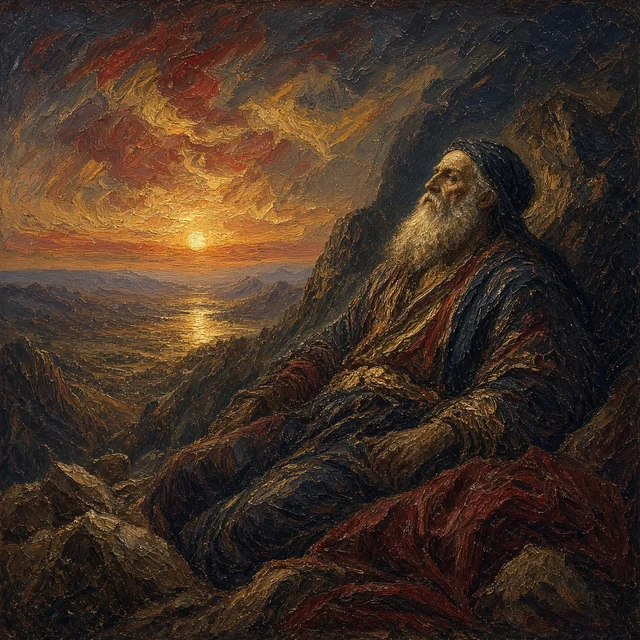
Jeshurun is an affectionate name associated with uprightness, which makes the next verb almost comic in its violence: the well fed creature “kicked.” The repeated language of fatness belongs to the abundance just celebrated. This is not a detached complaint about a body. It is an image of provision converted into resistance, as strength gained from the giver becomes strength used to forget him. The Rock returns here as both source and savior, the one who made, begot, and rescued Israel. Against that long identity stand gods described as newly arrived, unknown to the fathers, and recipients of sacrifices. Their novelty exposes the rupture. Israel is not recovering some older loyalty that the LORD displaced. It is exchanging the remembered Rock for alternatives without the same claim on its life. The section ends where its central failure began: forgetfulness. Deuteronomy has just loaded the song with food, protection, origin, and salvation so that forgetting cannot be mistaken for having received nothing memorable.
Deep dive
Jeshurun is an affectionate name connected with uprightness, making its placement beside kicking especially pointed. The name and the conduct pull in opposite directions. The repeated fatness is not a detached complaint about the body; it describes the result of the rich provision just celebrated. The creature uses strength acquired through feeding to resist the one who supplied the food.
The Rock returns as the Rock of salvation and the one who begot Israel. Stability, rescue, and origin are gathered into the name the people now lightly esteem. Their alternatives are described not as forgotten ancestral loyalties recovered at last, but as new gods that have newly appeared and were not feared by the fathers. The duplication of newness emphasizes the break with the remembered relationship.
The KJV calls the recipients of these sacrifices "devils," explicitly distinguishing them from God. First Corinthians 10:20 later uses the same opposition between sacrifices offered to devils and to God. Here the conclusion is forgetfulness: the people cease to keep in mind the one who formed them. The song has just filled its lines with food and protection so that this forgetting cannot be mistaken for the absence of anything worth remembering.
Words to trace: gods, provoked, Rock, abominations, anger, begat
Verse-by-verse path
- Deuteronomy 32:15
“Kicked” is baat, the verb Eli’s household is charged with in 1 Samuel 2:29, “Wherefore kick ye at my sacrifice?” Mid verse the poem swerves into direct address, three verbs that rhyme in Hebrew: shamanta, avita, kasita, fat, thick, gorged.
- Deuteronomy 32:16
“Strange gods” is simply zarim, strangers: the poem does not grant them the word god. “Provoked him to jealousy” recalls the second commandment, where the LORD calls himself “a jealous God” (5:9). Paul asks the Corinthians, “Do we provoke the Lord to jealousy?” (1 Corinthians 10:22).
- Deuteronomy 32:17
“Devils” is shedim, found only here and in Psalm 106:37. The Akkadian shedu was a protective spirit, the name given to the winged bull guardians at Assyrian palace gates. “Came newly up” means gods lately arrived, with no history among Israel’s fathers.
- Deuteronomy 32:18
“Formed thee” is meholelekha, from the verb for writhing in labour; Psalm 90:2 uses it for God bringing forth the earth. Here the Rock “begat”, and God is also pictured in birth pangs. “Unmindful” is a rare verb found only here.
Deuteronomy 32:15-18
King James Version15But Jeshurun waxed fat, and kicked: thou art waxen fat, thou art grown thick, thou art covered with fatness; then he forsook God which made him, and lightly esteemed the Rock of his salvation.
16They provoked him to jealousy with strange gods, with abominations provoked they him to anger.
17They sacrificed unto devils, not to God; to gods whom they knew not, to new gods that came newly up, whom your fathers feared not.
18Of the Rock that begat thee thou art unmindful, and hast forgotten God that formed thee.
Deuteronomy 32:19-27
Jealousy Answers Jealousy, and Judgment Has a Stated Restraint
The judgment answers the offence in mirrored language. Israel moves the LORD to jealousy with what is “not God,” and he says he will move them to jealousy with those who are “not a people.” The punishment is not random weather after covenant betrayal. Its verbal structure answers the rejected allegiance. Then the imagery spreads until nowhere feels secure: fire, arrows, hunger, heat, beasts, venom, sword outside, terror within. The list reaches young and old alike, preventing the consequences from being imagined as something confined neatly to armed men. Yet the movement toward annihilation stops for a stated reason. The LORD considers what the enemies would say. If Israel vanished entirely, adversaries might claim, “Our hand is high,” turning their temporary success into a theology of their own independent power. The restraint is not grounded in Israel's innocence. It protects the truth about who governs the outcome. Enemies may function within judgment without gaining the right to explain their success as if the LORD had disappeared from the account.

Deep dive
The response mirrors the offence. Israel provoked God through what is not God; he will provoke Israel through those described as not a people. The repeated terms make the punishment an answering reversal rather than an unrelated sequence of misfortunes. Romans 10:19 explicitly takes up the language about a non-people and a foolish nation when discussing Israel's response to the inclusion of others.
Fire, arrows, hunger, heat, beasts, venom, sword, and terror give the judgment a breadth that leaves neither outside nor inside secure. The list includes the young, the nursing child, and the aged. Those inclusions prevent the consequences from being confined in imagination to armed adults on a battlefield. The fire reaching the lowest depths and the foundations of mountains extends the poem's scale; it is not offered as a detailed map of the afterlife.
The threatened end reaches even the erasure of remembrance. Yet verses 26–27 name a restraint: enemies might claim that their own hand accomplished it and deny the LORD's action. The song does not identify Israel's innocence as the reason for that restraint. It concerns the truth about who governs the outcome. The enemies can become instruments of judgment without being allowed to interpret their success as proof of independent and unlimited power.
Words to trace: anger, fire, jealousy, lest, LORD, abhorred
Verse-by-verse path
- Deuteronomy 32:19
“Abhorred” is naats, to spurn, the verb used of Israel toward God in 31:20; now God spurns them. “His sons, and of his daughters” is the only mention of daughters in the song. The provoking is a family affair.
- Deuteronomy 32:20
“Froward” is tahpukhot, perversities, things turned upside down, a word Proverbs uses often. “No faith” is lo emun, nothing dependable, from the root of Amen. “I will see what their end shall be” pictures God stepping back to watch where they go.
- Deuteronomy 32:21
“Vanities” is hevel, breath or vapour, the word Ecclesiastes repeats: “vanity of vanities”. Jeremiah 2:5 plays on it: they “walked after vanity, and are become vain”. “Foolish nation” is goy naval, from the word that named Nabal in 1 Samuel 25:25, “Nabal is his name, and folly is with him.”
- Deuteronomy 32:22
“The lowest hell” is Sheol tachtit, the deepest part of the grave, the phrase of Psalm 86:13, “thou hast delivered my soul from the lowest hell”. In 1611 “hell” was the regular rendering of Sheol. “Her increase” is the harvest; the fire burns downward through the crops into the roots of the hills.
- Deuteronomy 32:23
“Spend mine arrows” means use them all up. Job 6:4 speaks of “the arrows of the Almighty” within him, and Lamentations 3:12 has God bend his bow and set the poet “as a mark for the arrow”. The verbs are in the first person: God is the archer.
- Deuteronomy 32:24
“Burning heat” is reshef, which was also the name of a Canaanite god of plague; Habakkuk 3:5 uses it of the plague that walks at God’s feet. “Bitter destruction” is qetev, the “destruction that wasteth at noonday” of Psalm 91:6. The list moves from famine to fever to fangs.
- Deuteronomy 32:25
The two pairs cover everyone: young man and young woman, infant and grey head. Ezekiel 7:15 uses the same frame, “The sword is without, and the pestilence and the famine within,” and Lamentations 1:20 laments, “abroad the sword bereaveth, at home there is as death.”
- Deuteronomy 32:26
“Scatter them into corners” renders a verb found only here, whose meaning is uncertain; suggestions include “blow them away” and “cut them in pieces”. To make their remembrance cease is the fate decreed for Amalek (25:19), threatened here against Israel.
- Deuteronomy 32:27
The reasoning is Moses’ own. In 9:28 and Numbers 14:15–16 he pleaded that the nations would say the LORD was not able. The song puts that argument into God’s mouth. “Behave themselves strangely” is nakar, to misread, the verb of Joseph who “made himself strange” to his brothers (Genesis 42:7).
Deuteronomy 32:19-27
King James Version19And when the LORD saw it, he abhorred them, because of the provoking of his sons, and of his daughters.
20And he said, I will hide my face from them, I will see what their end shall be: for they are a very froward generation, children in whom is no faith.
21They have moved me to jealousy with that which is not God; they have provoked me to anger with their vanities: and I will move them to jealousy with those which are not a people; I will provoke them to anger with a foolish nation.
22For a fire is kindled in mine anger, and shall burn unto the lowest hell, and shall consume the earth with her increase, and set on fire the foundations of the mountains.
23I will heap mischiefs upon them; I will spend mine arrows upon them.
24They shall be burnt with hunger, and devoured with burning heat, and with bitter destruction: I will also send the teeth of beasts upon them, with the poison of serpents of the dust.
25The sword without, and terror within, shall destroy both the young man and the virgin, the suckling also with the man of gray hairs.
26I said, I would scatter them into corners, I would make the remembrance of them to cease from among men:
27Were it not that I feared the wrath of the enemy, lest their adversaries should behave themselves strangely, and lest they should say, Our hand is high, and the LORD hath not done all this.
Deuteronomy 32:28-35
The Numbers Do Not Explain the Defeat
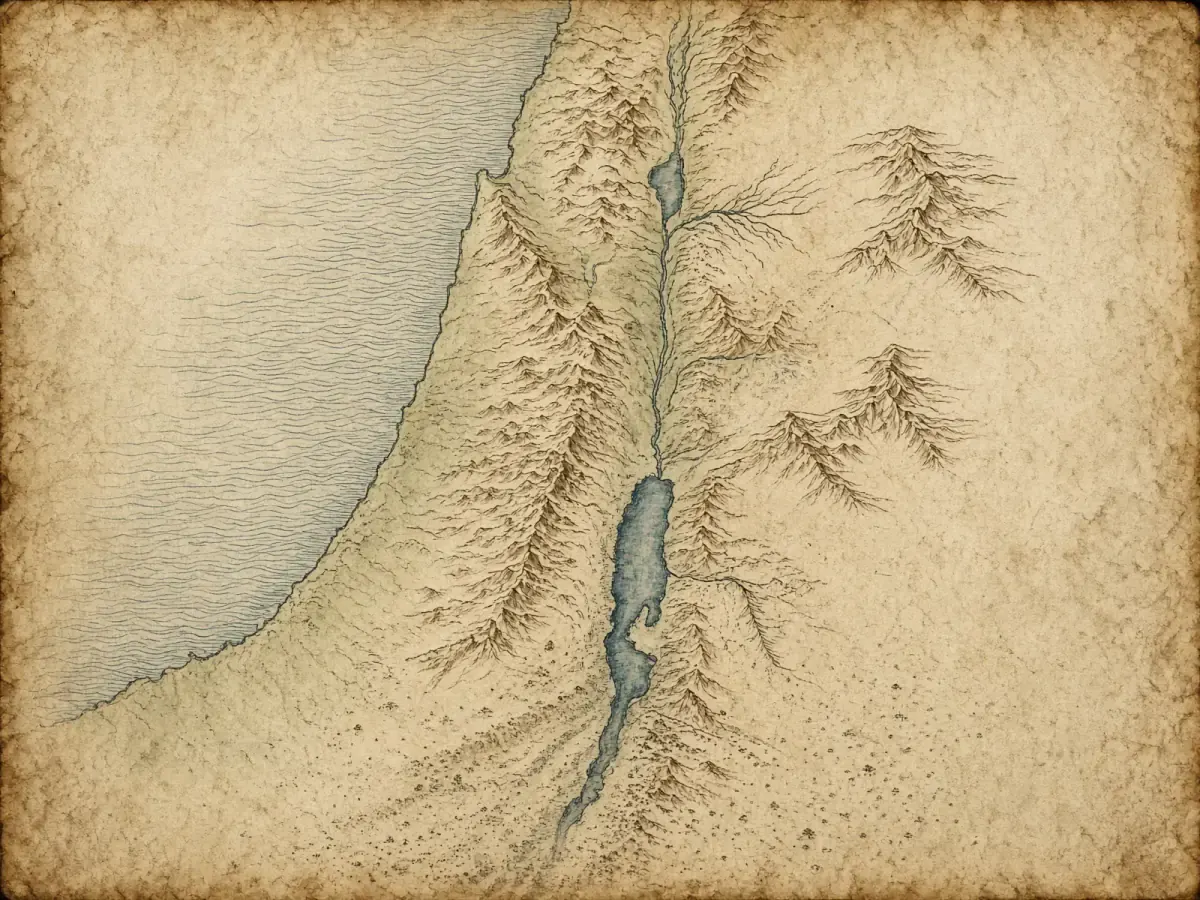
The startling arithmetic of one chasing a thousand and two putting ten thousand to flight is meant to break confidence in numbers as the explanation. A defeat that disproportionate requires another account, and the song supplies it: “their Rock had sold them, and the LORD had shut them up.” The precise reference of several pronouns in this section is debated, with interpreters differing over whether particular lines chiefly address Israel or its enemies. Deuteronomy does not need that uncertainty erased to make its central contrast work. Human strength alone does not explain the reversal. The vine imagery then turns abundance poisonous. Grapes yield gall, bitterness, and venom, and Sodom and Gomorrah become names for corrupted produce. Plenty is no guarantee of goodness when the source has gone bad. Finally, what is “laid up in store” with God moves toward a due time of recompense. Delay is not forgetfulness. The sliding foot and approaching calamity keep vengeance in the LORD's possession rather than turning it into a license for private retaliation.
Deep dive
The references of "they" and "their" are debated in this part of the song. Some readings keep Israel chiefly in view as the nation without counsel; others turn toward the enemies whose boasting has just been described. The shifts between God's people and their adversaries make some individual lines difficult to assign with certainty. The main contrast remains visible: a rout so disproportionate cannot be explained merely by counting soldiers. The Rock's handing over of the defeated people is the decisive explanation given.
The vine and wine images also reverse earlier abundance. Rich grapes have given way to gall, bitterness, and venom, with Sodom and Gomorrah naming the character of the produce. Depending on the identification of the pronouns, the image exposes Israel's corruption or the poisonous character of its enemies. In either case, agricultural richness is no longer the same thing as goodness. The fruit reveals what the vine produces.
What is laid up and sealed with God is not beyond eventual reckoning. The sliding foot and approaching calamity connect delay with a due time rather than with forgetting. Romans 12:19 explicitly quotes the declaration about divine vengeance when forbidding personal revenge. That use preserves a distinction central here: judgment belongs to the LORD and is not evidence that any observer may seize the role of its appointed executor.
Words to trace: Rock, grapes, vine, asps, belongeth, bitter
Verse-by-verse path
- Deuteronomy 32:28
“Void of counsel” is literally “perishing of counsels”, using the verb avad, the “ready to perish” of the confession in 26:5. The nation that began with a perishing father now has perishing wisdom.
- Deuteronomy 32:29
“Latter end” is acharit, what comes after. Lamentations 1:9 records the missed warning in Jerusalem’s fall: “she remembereth not her last end; therefore she came down wonderfully.”
- Deuteronomy 32:30
The ratio turns earlier promises around: “five of you shall chase an hundred, and an hundred of you shall put ten thousand to flight” (Leviticus 26:8), and “One man of you shall chase a thousand” (Joshua 23:10). “Sold them” becomes the Book of Judges’ formula for defeat: “he sold them into the hands of their enemies” (Judges 2:14).
- Deuteronomy 32:31
“Judges” here is pelilim, arbiters or assessors, the word of Exodus 21:22. The enemies themselves concede the difference, as Rahab does in Joshua 2:11 and the Philistines in 1 Samuel 4:8, who cry “Who shall deliver us out of the hand of these mighty Gods?”
- Deuteronomy 32:32
Josephus described fruit growing near the Dead Sea that looked edible but turned to smoke and ashes when plucked (Jewish War 4.484), and the Calotropis shrub there is still called the apple of Sodom. The vine of this verse is a plant from the same cursed soil.
- Deuteronomy 32:33
“Dragons” is tanninim, serpents or sea monsters; “asps” is petanim, usually taken as cobras. Psalm 58:4 compares the wicked to “the deaf adder that stoppeth her ear”, the same peten. The wine that should gladden has become venom.
- Deuteronomy 32:34
Documents and storerooms were closed with a clay seal impressed by a signet. Job 14:17 uses the image of a man’s wrongs, “My transgression is sealed up in a bag.” Nothing is lost; it is kept under seal until the seal is broken.
- Deuteronomy 32:35
Jonathan Edwards took the words “Their foot shall slide in due time” as the text of his sermon “Sinners in the Hands of an Angry God”, preached at Enfield in 1741. “Make haste” gives the coming things feet of their own, running toward the day.
Deuteronomy 32:28-35
King James Version28For they are a nation void of counsel, neither is there any understanding in them.
29O that they were wise, that they understood this, that they would consider their latter end!
30How should one chase a thousand, and two put ten thousand to flight, except their Rock had sold them, and the LORD had shut them up?
31For their rock is not as our Rock, even our enemies themselves being judges.
32For their vine is of the vine of Sodom, and of the fields of Gomorrah: their grapes are grapes of gall, their clusters are bitter:
33Their wine is the poison of dragons, and the cruel venom of asps.
34Is not this laid up in store with me, and sealed up among my treasures?
35To me belongeth vengeance, and recompence; their foot shall slide in due time: for the day of their calamity is at hand, and the things that shall come upon them make haste.
Deuteronomy 32:36-43
False Protectors Fall Silent, and the Nations Are Summoned to Rejoice
The song reaches a point where Israel's power is gone, and there the word “judge” stands beside a turn toward compassion for the LORD's servants. The former gods are summoned almost sarcastically: let the powers that consumed sacrifices now rise and provide shelter. Their silence clears the stage for the LORD's declaration, “I, even I, am he.” Killing and making alive, wounding and healing are placed in the same divine hand. Judgment and restoration are not assigned to competing powers. The imagery of lifted hand, everlasting life, sword, and arrows keeps the reckoning severe, especially where the blood of servants and adversaries comes into view. Yet the final movement is broader than vengeance. The nations are called to rejoice with God's people, while mercy is spoken over land and people. The song therefore does not flatten every nation into one permanent category of enemy. It ends by distinguishing adversaries from nations invited into rejoicing over the LORD's vindicating action.
Deep dive
The word "judge" now appears beside compassion for powerless servants. The KJV's "repent himself" describes a turn in God's treatment of them, not a confession that he has committed a moral wrong. The question put to their former gods is deliberately exposing: those associated with consuming sacrifices must now provide protection. Received offerings have not made them capable of rescuing their worshippers.
The declaration of God's sole power joins killing with making alive and wounding with healing. The same hand exercises judgment and restoration; no rival power is introduced to account for one half of the pair. The lifted hand, everlasting life, sword, and arrows then give the announced vengeance solemn force. Mercy toward the servants does not mean the poem has ceased to speak of the bloodshed done against them.
The final summons addresses the nations in relation to God's people. They are called to rejoice, while adversaries receive vengeance and the land and people receive mercy. The nations are therefore not reduced to a single undifferentiated category of enemies. Romans 15:10 quotes this invitation in its account of Gentiles joining in praise. The song that began by distinguishing Israel's portion among the nations ends with nations addressed as participants in rejoicing over the LORD's vindicating action.
Words to trace: blood, hand, people, render, servants, sword
Verse-by-verse path
- Deuteronomy 32:36
Psalm 135:14 quotes the first half word for word. “Shut up, or left” is a fixed Hebrew pair meaning everyone, bond and free, used when prophets threaten a royal house (1 Kings 14:10; 21:21) and in 2 Kings 14:26, where God saw “there was not any shut up, nor any left”.
- Deuteronomy 32:37
“Trusted” is chasah, to take refuge, the verb of Psalm 2:12, “blessed are all they that put their trust in him”. The King James spells this false “rock” with a small letter; the song keeps the capital for the true one.
- Deuteronomy 32:38
The irony is sharp: gods who could eat the fattest pieces and drink the wine offered to them cannot now get up. Psalm 50:13 puts God’s own answer on the subject, “Will I eat the flesh of bulls?” The address suddenly turns to “you”, plural, the people themselves.
- Deuteronomy 32:39
“I, even I, am he” is ani ani hu, and Isaiah repeats the formula in his own chapters on idols (Isaiah 43:25; 51:12). Hannah’s song draws on the next line: “The LORD killeth, and maketh alive” (1 Samuel 2:6). No one else is left in the verse to credit.
- Deuteronomy 32:40
Raising the hand was the gesture of an oath; Abram says “I have lift up mine hand unto the LORD” (Genesis 14:22). Men swear by God, and God, having no one greater, swears by his own life. “As I live” is his oath formula in Numbers 14:21.
- Deuteronomy 32:41
“Glittering sword” is literally “the lightning of my sword”, beraq. Ezekiel 21:10 speaks of a sword “furbished that it may glitter”. The verse presents God as a warrior whose hand grips judgment the way it grips a hilt.
- Deuteronomy 32:42
“The beginning of revenges” is disputed; many read it as “the long haired heads of the enemy”, from para, loose hair. The same rare word opens Deborah’s song in Judges 5:2, often rendered “when the leaders took the lead in Israel”.
- Deuteronomy 32:43
The Hebrew verse is short. A Dead Sea Scroll of Deuteronomy and the Greek version preserve a longer form that includes “worship him, all ye gods” or “angels”, which Hebrews 1:6 quotes. “Be merciful unto his land” is kipper, to make atonement: the land itself is cleansed.
Deuteronomy 32:36-43
King James Version36For the LORD shall judge his people, and repent himself for his servants, when he seeth that their power is gone, and there is none shut up, or left.
37And he shall say, Where are their gods, their rock in whom they trusted,
38Which did eat the fat of their sacrifices, and drank the wine of their drink offerings? let them rise up and help you, and be your protection.
39See now that I, even I, am he, and there is no god with me: I kill, and I make alive; I wound, and I heal: neither is there any that can deliver out of my hand.
40For I lift up my hand to heaven, and say, I live for ever.
41If I whet my glittering sword, and mine hand take hold on judgment; I will render vengeance to mine enemies, and will reward them that hate me.
42I will make mine arrows drunk with blood, and my sword shall devour flesh; and that with the blood of the slain and of the captives, from the beginning of revenges upon the enemy.
43Rejoice, O ye nations, with his people: for he will avenge the blood of his servants, and will render vengeance to his adversaries, and will be merciful unto his land, and to his people.
Deuteronomy 32:44-47
The Song Must Reach the Children as Instruction
After the long song, Moses refuses to let its poetry remain a performance people admired and forgot. Hoshea, the earlier name of Joshua, stands with him as the words are spoken, linking the coming leader to testimony that will outlast Moses. Then the movement is direct: ears, heart, children, obedience. The people have heard the song publicly; now they are told to “set your hearts” to its words and command their children to observe the law. The next line supplies the measure of its importance: “it is not a vain thing for you.” These words are not empty, decorative, or disposable after the ceremony. They are identified with life and continued days in the land. That returns the reader to chapter 30, where life was attached to loving and cleaving to the LORD. The song's forceful metaphors, difficult warnings, and remembered abundance all serve that practical transmission. Its success is not measured by how impressive the recitation sounded, but by whether its witness survives into the next generation.
Deep dive
Hoshea is Joshua's earlier name, as Numbers 13:16 explains, not an additional successor introduced at the close of the song. His presence beside Moses joins the coming leadership to the words that will remain after Moses dies. The account says that all the words are spoken in the people's hearing before Moses explains their continuing obligation.
The movement from hearing to heart to children keeps the song from becoming merely a memorable performance. Its words testify, and the children are to be commanded to observe the law. The KJV's "not a vain thing" denies emptiness or worthlessness, then identifies the words with life and continued dwelling in the land. This returns to the terms of chapter 30, where love and allegiance were tied to life rather than treated as decorative additions to possession. The song's beauty and severe imagery serve that work of remembering and doing. The passage measures its importance by what the people must carry forward, not by an account of how impressive the recitation sounded.
Words to trace: words, Moses, thing, children, command, days
Verse-by-verse path
- Deuteronomy 32:44
This verse and 31:30 frame the song like bookends, both saying Moses spoke its words in the people’s ears. The only other places the Pentateuch calls Joshua “Hoshea” are Numbers 13:8 and 13:16, before Moses renamed him.
- Deuteronomy 32:45
“Made an end” is vaykhal, the verb the Greek version has in 31:1, and the verb of Genesis 2:2, “on the seventh day God ended his work”. The speaking that filled most of the book is finished here.
- Deuteronomy 32:46
“Set your hearts” is simu levavkhem, put your hearts on them, as one sets a hand on something to hold it. Teaching the children echoes the Shema’s instruction (6:7). The final phrase ties song and law together: the song is set to the words of the whole law.
- Deuteronomy 32:47
“Vain” is rek, empty. Rashi, following an earlier midrash, gave the phrase a famous twist: “it is not an empty thing from you”, and if it seems empty, the emptiness comes from you, from not labouring in it.
Deuteronomy 32:44-47
King James Version44And Moses came and spake all the words of this song in the ears of the people, he, and Hoshea the son of Nun.
45And Moses made an end of speaking all these words to all Israel:
46And he said unto them, Set your hearts unto all the words which I testify among you this day, which ye shall command your children to observe to do, all the words of this law.
47For it is not a vain thing for you; because it is your life: and through this thing ye shall prolong your days in the land, whither ye go over Jordan to possess it.
Deuteronomy 32:48-52
The Man Who Has Spoken of Life Is Told Where to Die
The timing is almost painfully precise. On “that selfsame day,” after Moses has told Israel that these words are its life, the LORD tells him where he will die. Mount Nebo will give him a view of the land but not entry into it. Deuteronomy does not soften that boundary with an invented private speech from Moses. It states both sides: the land is truly being given to Israel, and Moses truly will not cross. The reason is also not left as an obscure technical mistake. The passage points back to Meribah, where Moses and Aaron failed to sanctify the LORD among the people. Their public office gives the public setting of that failure particular weight. Aaron's death supplies the comparison for Moses' own gathering to his people, joining the brothers in the consequence while distinguishing their locations. The final permission to see Canaan is therefore neither a reversal nor a cruelty added for effect. It places the still certain promise before the eyes of the leader whose own commission stops at its border.
Deep dive
The timing creates the final contrast. Moses has just identified these words as the people's life, and on that same day he receives instructions for his own death. The land remains a promised possession for Israel while becoming a sight Moses may behold but not enter. The account gives that distinction without supplying a private speech of resentment, regret, or acceptance.
The stated reason concerns Moses and Aaron failing to sanctify the LORD among Israel at the waters of Meribah. Numbers 20:12 likewise locates the failure in unbelief and the failure to sanctify God before the people. Deuteronomy does not reduce it to an unexplained technical mistake with a rock. The public role of the brothers makes the failure's public setting important.
Aaron's death supplies the comparison for Moses' coming departure. The two leaders share both the named breach and the boundary it brings, though their deaths occur in different places. The final permission to see the land stands beside the repeated prohibition on entering it. Both belong to the closing word: the exclusion is real, and the promised inheritance is still placed before Moses' eyes.
Words to trace: children, Israel, land, mount, gathered, people
Verse-by-verse path
- Deuteronomy 32:48
“That selfsame day” is beetsem hayyom hazeh, the phrase used when Noah entered the ark (Genesis 7:13) and when Israel left Egypt (Exodus 12:41). Rashi observed the three together: each an event done openly in daylight, whatever anyone wished to prevent.
- Deuteronomy 32:49
Abarim means “the regions beyond” or “the crossings”, from avar, to cross over. The man forbidden to cross climbs the mountains named for crossing. The command first came in Numbers 27:12; Nebo looks across the Dead Sea’s north end to Jericho.
- Deuteronomy 32:50
“Gathered unto thy people” is said of Abraham (Genesis 25:8), Isaac and Jacob. On Mount Hor Moses stripped Aaron of his garments and put them on Eleazar his son, and Aaron died on the mountain top (Numbers 20:28). Moses will have no son to dress.
- Deuteronomy 32:51
“Trespassed” is maal, a breach of faith, the word used of Achan in Joshua 7:1. “Sanctified me not” plays on the place name: Kadesh means holy, and the failure at Kadesh was a failure to treat God as holy.
- Deuteronomy 32:52
“Before thee” is minneged, from opposite, at a distance, the word used of Hagar sitting “over against” her child a bowshot away (Genesis 21:16). The verse repeats “which I give the children of Israel” from verse 49, closing the command where it began.
Deuteronomy 32:48-52
King James Version48And the LORD spake unto Moses that selfsame day, saying,
49Get thee up into this mountain Abarim, unto mount Nebo, which is in the land of Moab, that is over against Jericho; and behold the land of Canaan, which I give unto the children of Israel for a possession:
50And die in the mount whither thou goest up, and be gathered unto thy people; as Aaron thy brother died in mount Hor, and was gathered unto his people:
51Because ye trespassed against me among the children of Israel at the waters of Meribah-Kadesh, in the wilderness of Zin; because ye sanctified me not in the midst of the children of Israel.
52Yet thou shalt see the land before thee; but thou shalt not go thither unto the land which I give the children of Israel.
Questions to keep in mind while reading
- Identify the people addressed and the covenant setting.
- Distinguish rescue, worship, holiness, justice, and community responsibility.
- Read commands in their literary and covenant context before making a modern application.
Text first
Where readers differ
The chapter summary begins with what the passage says and how its parts fit together. It does not assume one denomination has already settled every question. Where a conclusion depends on a tradition, literary theory, or historical reconstruction, that dependence is named openly.
The KJV text is presented first. Interpretive conclusions are labeled, and differences are introduced only when they help a reader understand why serious communities do not always reach the same answer.
Comparative interpretive notes for this chapter are in preparation. Until reviewed notes are ready, this page separates the KJV text from summary and application without claiming that serious readers agree on every question.
Questions beneath the surface
- What account of God, human freedom, responsibility, and the good life emerges from Deuteronomy 32?
- Which tension does the chapter refuse to resolve quickly?
- What changes when the chapter is read as part of the whole canon rather than as an isolated moral lesson?
- Where might a sincere reader confuse a familiar tradition with something the text states directly?
Questions for serious personal contemplation
These open-ended questions make room for tension, honest response, prayer, and conclusions that remain accountable to the chapter.
Observe without rushing
What part of Deuteronomy 32 makes you stop, feel unsettled, or feel surprised, and why?
Which detail in the passage would be easiest to overlook? How does that detail change your understanding?
Where do you see tension between what happens and this focus: Deuteronomy 32:48–52 completes a passage that was not covered by the original study-unit map. Its own wording and immediate context supply the focus.?
What important question does the passage leave open instead of resolving quickly?
Examine your inner life honestly
Which person, response, fear, or desire in the passage feels most like your own life right now?
What assumption about God, other people, or yourself does this text challenge?
Which part would you rather soften, avoid, or explain away too quickly? What might that reaction reveal?
If this Scripture could ask you one direct question, what do you think it would ask?
Respond with wisdom and courage
What do you need to remember, confess, grieve, thank God for, or trust after reading this passage?
How might another faithful person read this situation differently without ignoring the text?
What obedient response would be costly, uncomfortable, or slow, yet still faithful to Scripture?
What question will you carry into prayer this week, and which verses will you keep in front of you?
Music and video connected to the passage
Related media appears when its Scripture reference overlaps this study. Music and video can illuminate a theme while the biblical text remains the foundation.